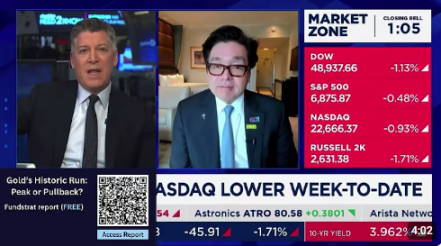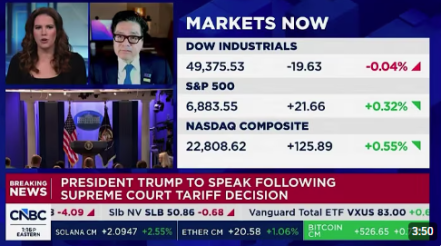



The S&P 500 lost 1.6% this week, down for the third week in a row and marking its longest losing streak since the four-week long stretch ending on March 14, 2025. Nine out of 11 sectors fell, with only energy and utilities segments in the green.
In energy markets, oil prices gave investors whiplash. Last weekend, prices for Brent crude, the international oil benchmark, rose to over $115 a barrel, but pared those gains over the course of the week. On Friday, oil prices settled at $100 a barrel, but remained up nearly 40% since the U.S.-Israeli strike on Iran.
Attacks on ships in the Strait of Hormuz and the threat of attacks led to the disruption of oil supply. The International Energy Agency on Wednesday said it will release oil from its reserves to improve supply in the near term.
Fundstrat Head of Technical Strategy Mark Newton said during the weekly huddle that “we had a substantial rally in most parts of energy, and now they’re starting to fade. That’s a sign that we’re seeing exhaustion signals in many parts of energy,” he said.
To some extent, the energy sector’s fortunes are closely tied with that of the duration of the war. Conflicting information from the White House about the length had confused investors earlier in the week. Bets on Polymarket show that traders now expect the war to go for longer, Head of Research Tom Lee pointed out.
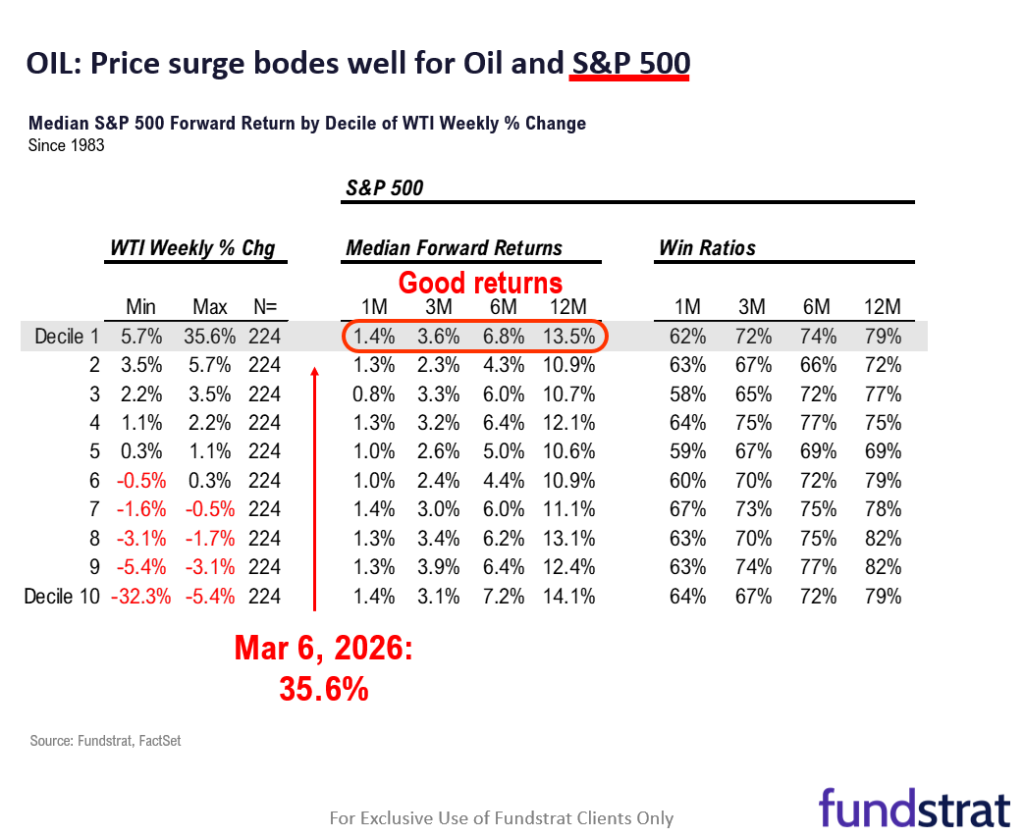
Even in that scenario, Lee believes that higher oil can be good for U.S. stocks. “Higher oil is actually good for the U.S. economy, in aggregate” he said.
There’s four reasons for that. First, the U.S. is a net exporter of oil. Second, China and other countries in Asia along with Europe are much dependent on oil flows out of the Strait of Hormuz compared to the U.S. Third, higher oil poses global growth risks, which favors rotation into growth stocks that the U.S. has plenty of. Indeed, tech stocks fell less than the broader market this week.
Fourth, Lee said that higher oil will filter into core inflation eventually, putting the Trump put into play. Higher gasoline is not popular and the midterm elections will have sway, favoring a shorter conflict. “When markets feel so much pain, we’ve got the Trump put,” he said.
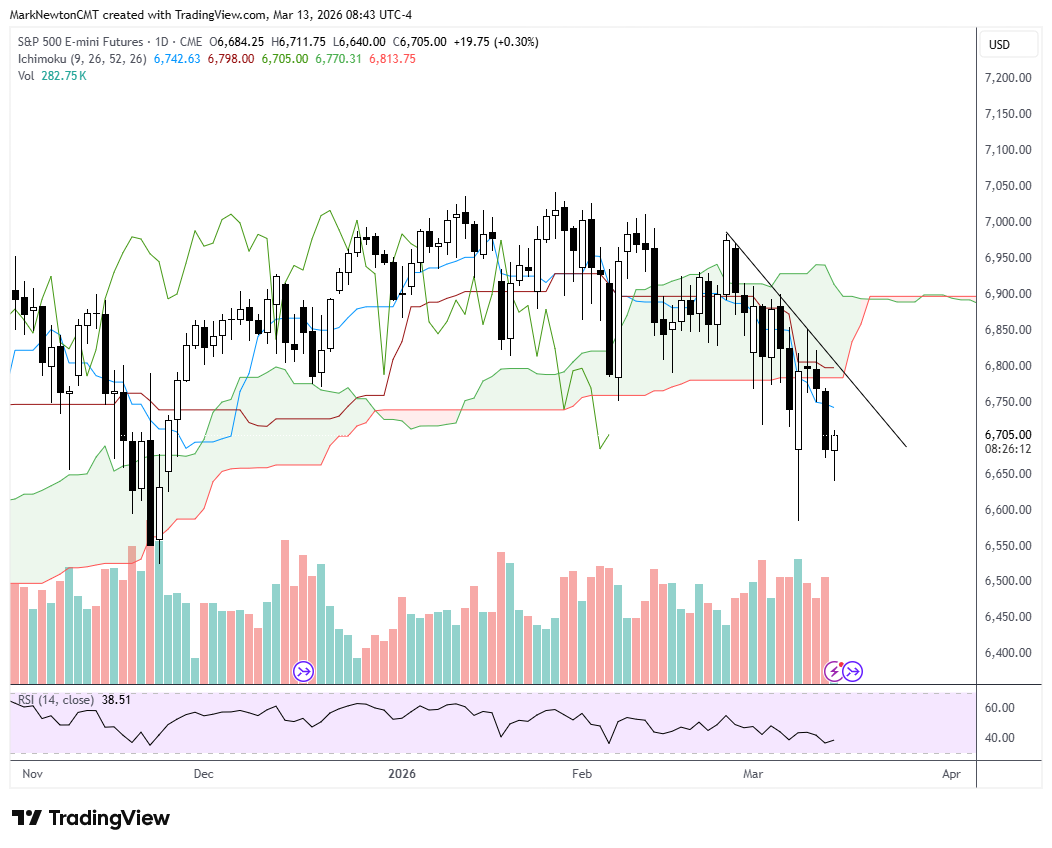
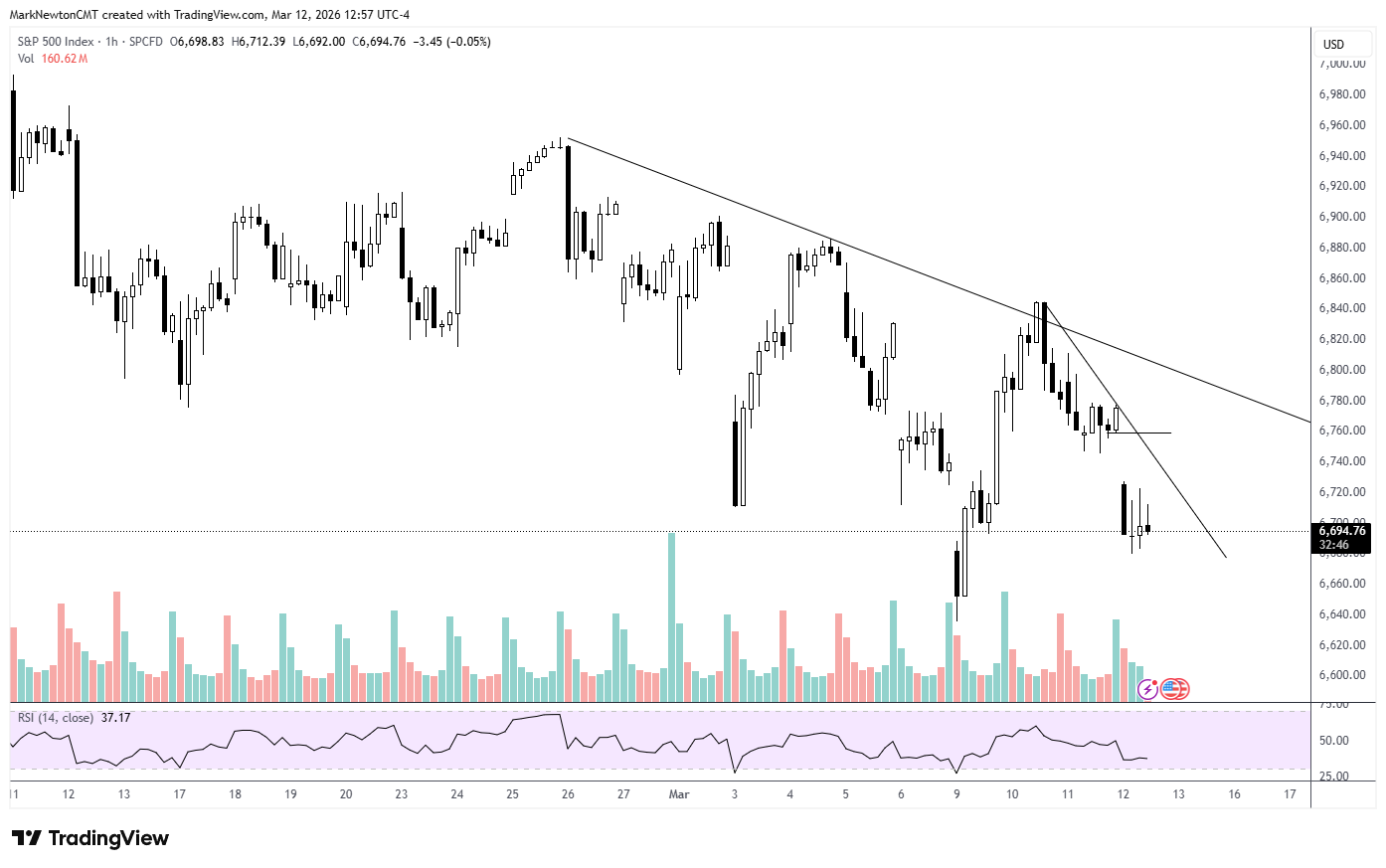
Newton remains bullish on stocks in the near term.
“I think for the time being, things are OK, “ he said. “I don’t think we’ve seen that much total weakness in equities despite various parts of the market having been hit very hard. My own sense is that we’re setting up for a rally up to near 6,950, and after that, I think we could be in for sort of a rough April.”