






Stocks inched higher this week, driven by a weakening narrative for interest-rate hikes in September.
The S&P 500 finished the week up 0.36% to 7,785.76 points, off 0.2% from the fresh record of 7,798.99 hit on Thursday—putting the index on course to add 3.40% this month.
The push higher came after the July consumer-price index report on Wednesday came in-line with expectations, rising 0.1% from a month ago and 3.4% from a year ago. Monthly core CPI added 0.2%, while the annual rate was 2.5%. Producer-price inflation data on Thursday coming in below expectations further pushed investors away from the “inflation derangement syndrome,” which Fundstrat Head of Research Tom Lee has coined in recent days to describe the market’s propensity to latch onto an inflationary environment narrative.
According to Lee, there’s five reasons why a hike would be worse for Fed credibility: (1) Inflation’s already on “glide path” lower (2) A single hike would be viewed as a rollback of previous cuts (3) A hiking cycle will not slow AI spending, while high 10-year and 30-year Treasury yields already slow housing and durables (4) Both core PCE and core CPI from a year ago are declining (5) The Fed would be perceived as capitulating to the pundits.
Lee expects the S&P 500 will wrap up August between 7,900-8,000 points, especially because most of the bloodbath in AI stocks is over, according to him.
In corporate news, Nvidia announced a partnership with Apollo, BlackRock, Blackstone, Brookfield, Goldman Sachs, and KKR to “mobilize” over $500 billion with the goal of providing new sources of capital for AI purchases. Lee said the deal “brings independent capital to AI.” With the move, “Wall Street is financializing compute, essentially creating an asset class,” he said.
Lee believes the move could create additional liquidity and transparency for AI financing and lower the AI cost of funding, which would be a positive for AI stocks and the overall market.
Roundhill Memory ETF DRAM0.76%, for example, has surged 13.3% this week.
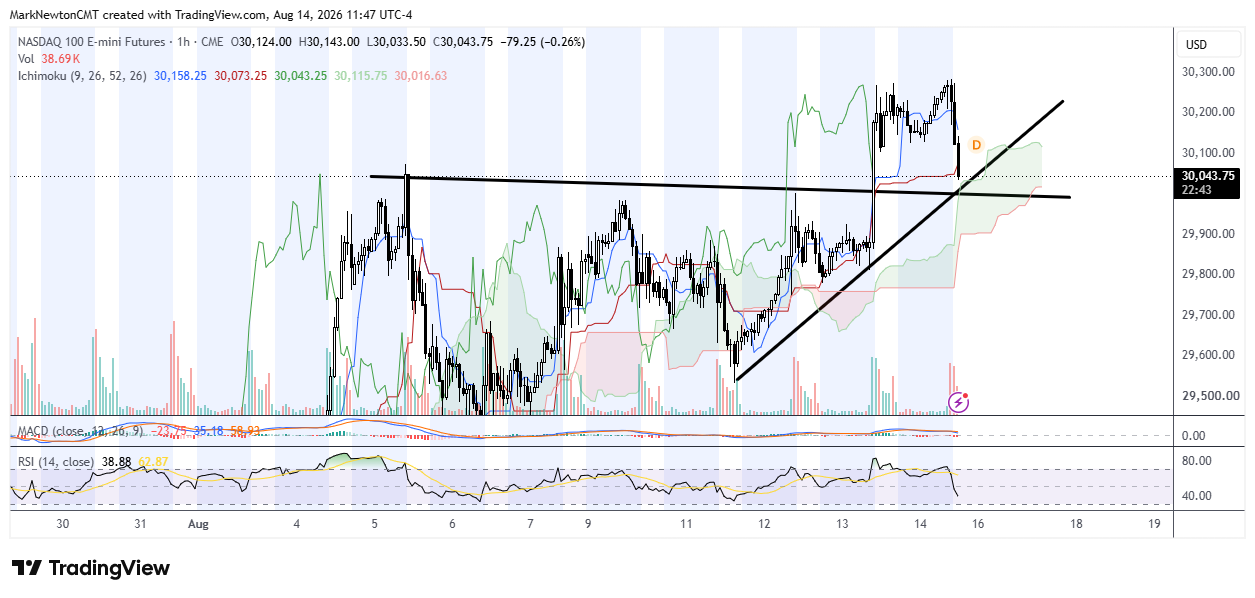
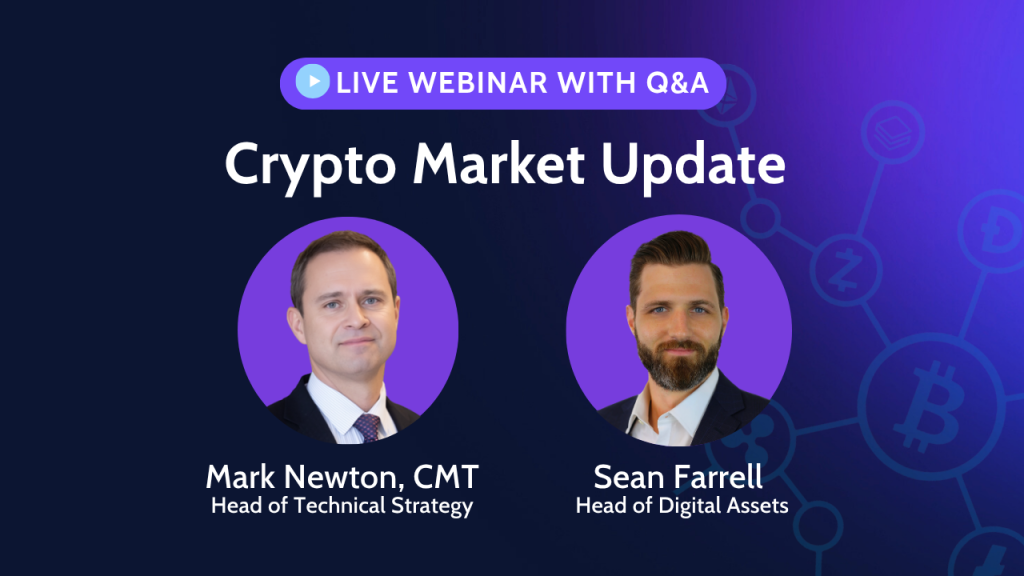
Head of Technical Strategy Mark Newton isn’t convinced that memory and storage stocks are back just yet. Though he is impressed by their “meaningful push off the lows,” in the longer term, he still thinks that momentum rolled over pretty sharply over the span of 10 weeks. He expects to see some backing and filling before a bigger move up.
“This took us 10 weeks, so it’s not something where over the next three months, I expect this to move up into those highs,” he said.
Chart of the Week
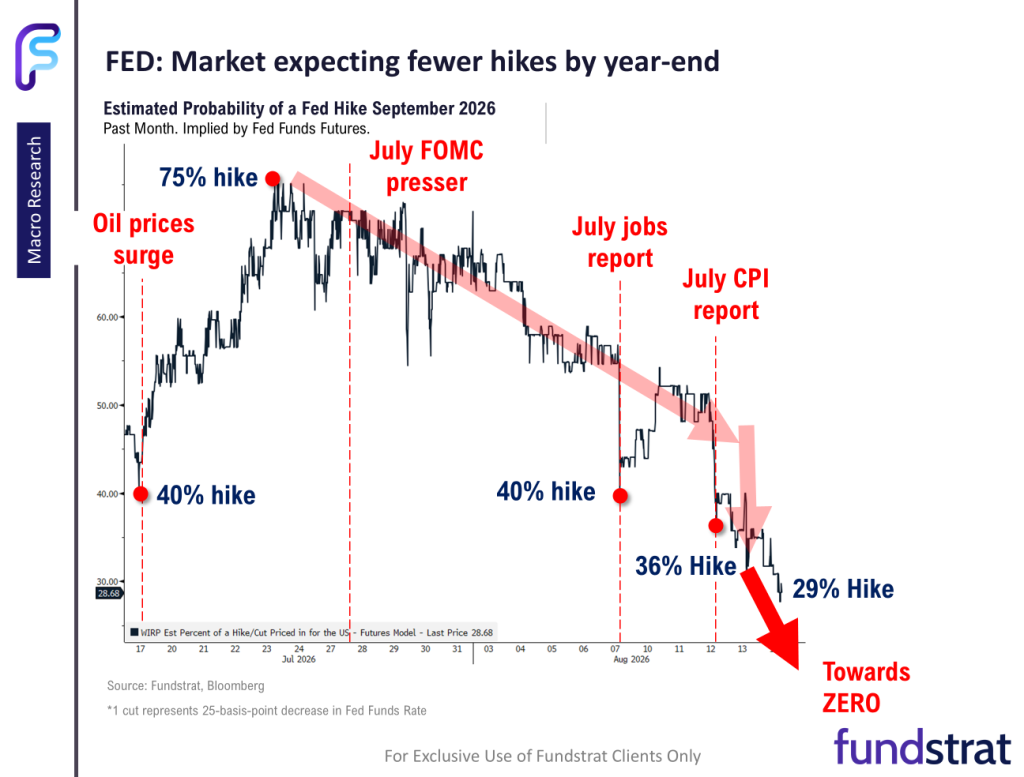
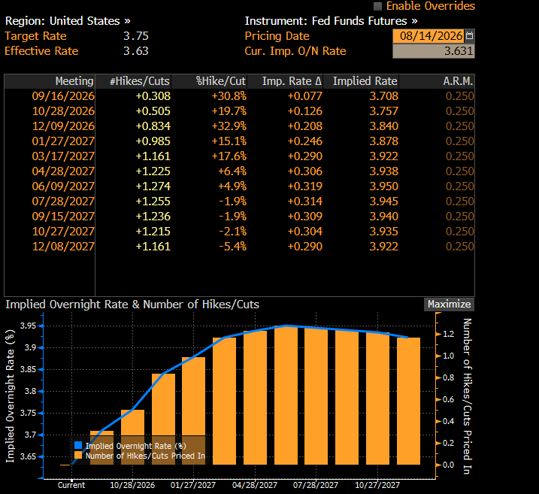
Naturally, after the inflation reports, investors started expecting fewer hikes by the year-end. Odds of a September rate-hike, for example, were at 32.6% on Friday, compared to 44% a week ago, according to the CME’s FedWatch tool, and also as seen in our Chart of the Week.
Recent ⚡ FlashInsights


|
|
|
|
|
FS Insight Video: Weekly Highlight
Key incoming data
8/11 6:00 AM ET: Jul Small Business Optimism SurveyTame8/11 10:00 AM ET: Jul Existing Home SalesTame8/12 8:30 AM ET: Jul CPITame8/13 8:30 AM ET: Jul PPITame8/14 8:30 AM ET: Jul Retail Sales DataTame8/14 10:00 AM ET: Aug P U. Mich. Sentiment and Inflation ExpectationTame- 8/17 8:30 AM ET: Aug Empire Manufacturing Survey
- 8/17 10:00 AM ET: Aug NAHB Housing Market Index
- 8/17 4:00 PM ET: Jun Net TIC Flows
- 8/19 2:00 PM ET: Jul FOMC Meeting Minutes
- 8/20 8:30 AM ET: Aug Philly Fed Business Outlook
- 8/21 9:45 AM ET: Aug P S&P Global Services PMI
- 8/21 9:45 AM ET: Aug P S&P Global Manufacturing PMI
Stock List Performance
In the News
|

|


|
| More News Appearances |



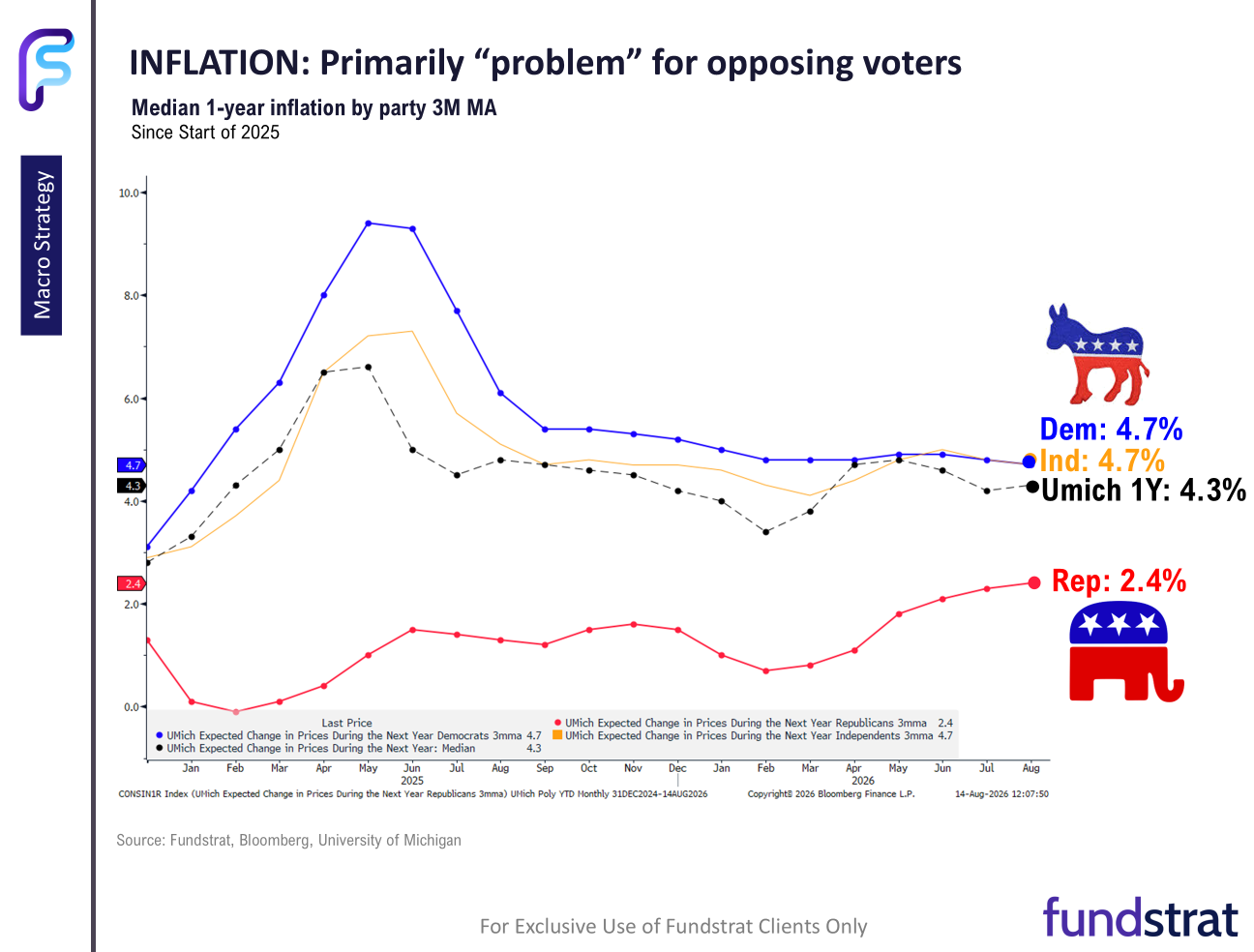
- U Mich 1-yr inflation political affiliation shows Dems are the ones seeing “high inflation”
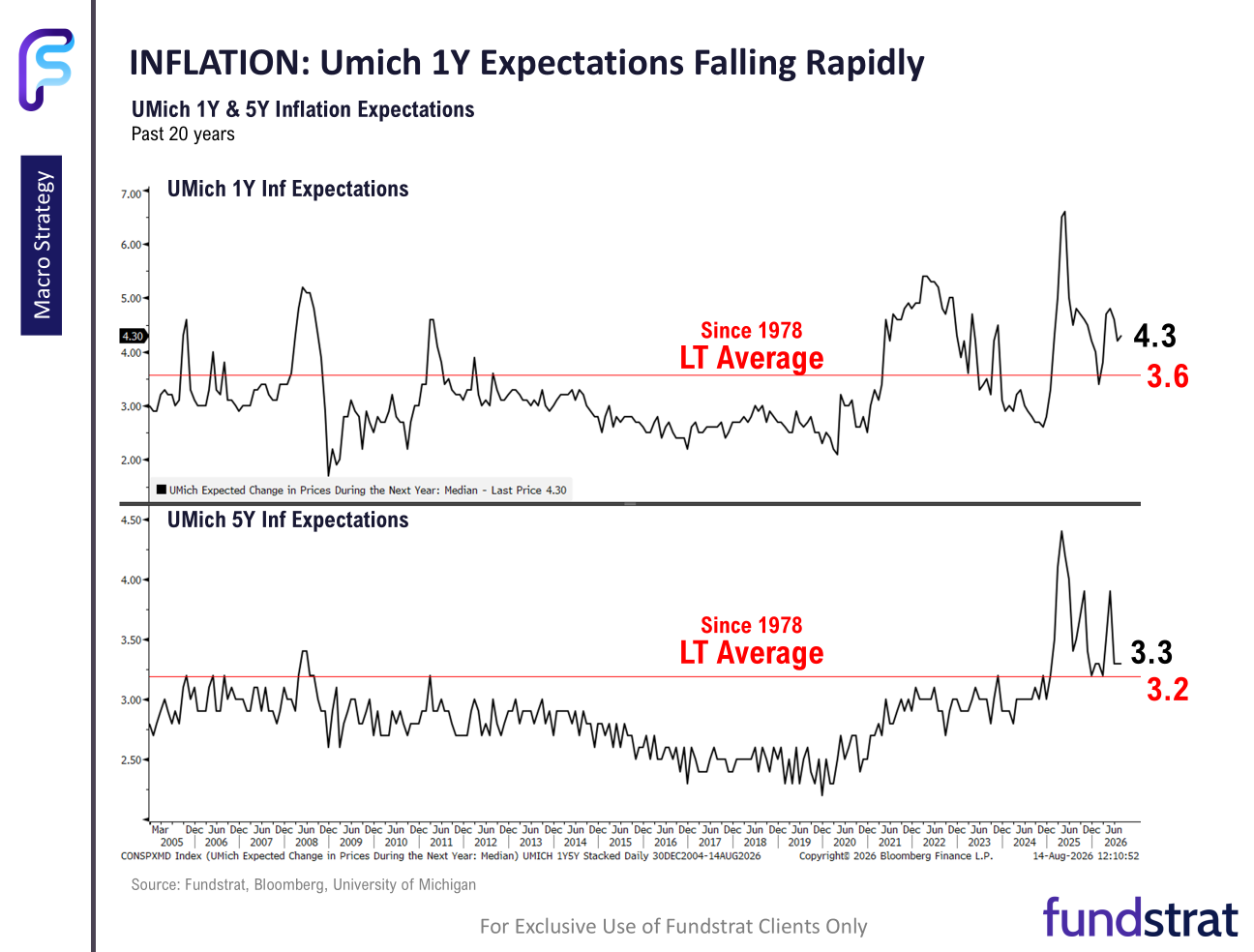
- 5-yr inflation expectations at 3.3%, basically at the 50-yr survey avg of 3.2%
Does it make sense for pundits to call for Fed to raise rates? Nope