




- First, closing the loop on Clarity, yesterday’s procedural vote failed to reach the 60 votes required to move the bill toward Senate debate. The official tally was 49-50. For the time being, I think it is appropriate to treat Clarity as effectively dead and defer any potential revival to an uncertain later date, likely with a future Congress. The positive read-through is that the regulatory story does not end with Congress. I continue to expect rulemaking from the SEC and CFTC to provide institutions with additional rules of the road. The obvious limitation is that agency rules are not enshrined in statute and can ultimately be revisited by a future administration, although rules that are written, adopted and implemented should develop some degree of institutional stickiness. We did see crypto retrace the optimism it priced in on Monday, but like I said Monday evening, downside was limited due to broadly skeptical expectations heading into this week.
- Hyperliquid also received a meaningful regulatory/distribution win today. Payward, Kraken’s parent company, announced plans to bring builder-deployed HIP-3 perpetual futures markets to U.S. clients through its regulated entities. This will represent Hyperliquid’s first builder-deployed permissioned perpetual markets. I think the strategic importance is larger than today’s relatively muted HYPE reaction suggests. A respected centralized intermediary is effectively choosing to leverage Hyperliquid’s on-chain infrastructure rather than recreating the entire stack itself.
- There are reasonable questions around the immediate financial impact. Kraken has roughly 6.6 million funded accounts, but commands only about 5% of global spot volumes and roughly 50-70 bps of perpetual futures volume by our estimates. More importantly, these permissioned markets will be segregated from Hyperliquid’s existing permissionless liquidity, so depth and actual user adoption will need to be monitored. That likely helps explain why HYPE’s reaction was positive (up ~3% at one point) but relatively muted relative to what one would expect from such a headline. I think that tempered expectations are a good thing as it provides a lot of room for upside surprises. Further, this creates a template other regulated intermediaries can potentially replicate. If that happens, today’s announcement becomes much more important than the initial Kraken volumes alone would imply.
- ZEC was the standout performer today, trading up roughly 20% at one point after holders voted to increase network speed by reducing block times from 75 seconds to 25 seconds. More importantly in my view, holders elected to preserve the existing supply schedule, retaining the 21 million supply cap and Bitcoin-like halving cadence. Scarcity is a central component of the ZEC investment thesis, so maintaining that monetary schedule is an important positive.
- The positioning setup also helped fuel today’s move. Open interest increased roughly 20% from last night while funding rates moved lower and were negative for much of the morning, suggesting much of the incremental leverage was positioned against the rally. Once ZEC cleared its prior high around $1,300, some meaningful short covering followed and helped push prices toward $1,400. I continue to favor leaning into the name here. CYPH has been consolidating following the major high-volume reversal we flagged last week, but continued upside in ZEC could allow that consolidation to resolve higher and restore CYPH’s role as a higher-beta ZEC expression.
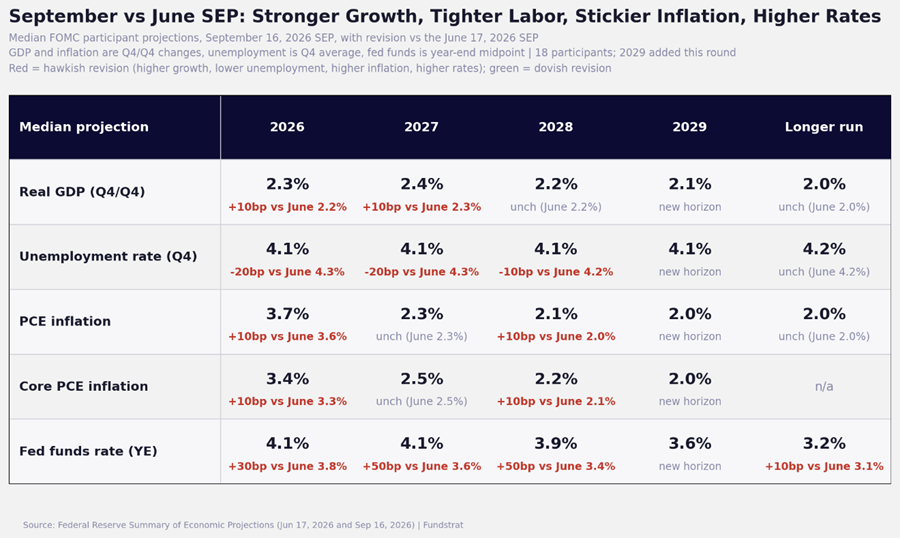
- Moving to the main event, the Fed raised the target range by 25 bps to 3.75-4.00%, as expected, in a unanimous 12-0 decision. The updated SEP was fairly hawkish. Relative to June, policymakers moved toward stronger real growth and lower unemployment, while 2026 inflation expectations remained elevated. The median unemployment projection is now 4.1% through the forecast horizon, while median 2026 real GDP growth is 2.3%.
- The dot plot reinforces that hawkish message. Most participants see another 25 bp hike from today’s new range, while the first decline in the median projected policy rate does not arrive until 2028. The longer-run neutral-rate estimates also continue to creep higher, another signal worth keeping an eye on.
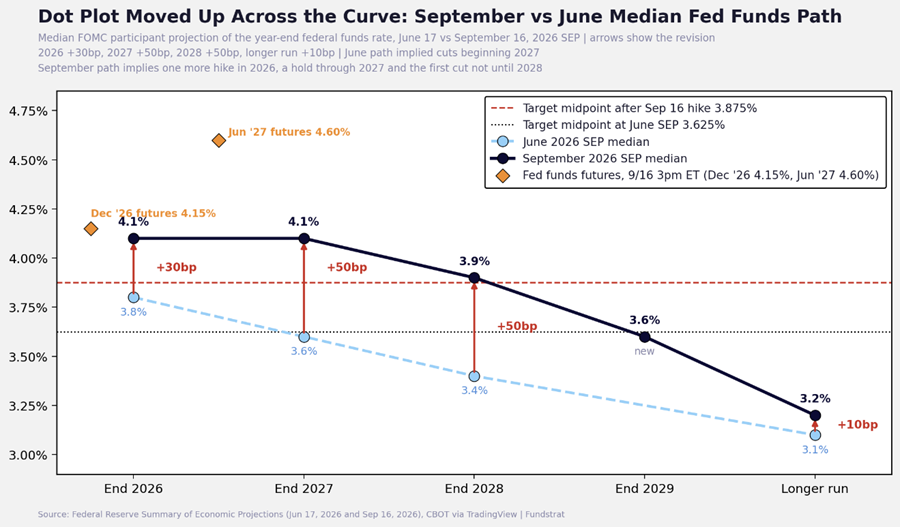
- When paied with Warsh’s presser, I think it is difficult to interpret today as anything other than a hawkish Fed outcome. Fed funds futures repriced further upward during the press conference, even though short-rate expectations were already quite hawkish coming into the meeting. That said, the curve flattened materially. The short end absorbed the brunt of the selloff while the long end was comparatively better behaved. I think that is an important distinction. The market appears increasingly comfortable pricing tighter Fed policy as a drag on future growth without simultaneously extrapolating an uncontrolled rise in long-term yields.
- This brings us back to the tension we have been discussing between the Fed and Treasury. A major theme of today’s press conference was the role of supply shocks and input costs that monetary policy cannot directly control. If the Fed continues removing accommodation into an environment where a meaningful portion of the inflation impulse is coming from crude and other supply-side constraints, higher rates can suppress demand and increase financing costs without necessarily fixing the underlying supply problem. Slower nominal activity would also pressure tax receipts, while higher interest expense works in the opposite direction on the deficit.
- That could ultimately increase rather than decrease the pressure on Treasury to contain long-term financing costs. The Treasury has already demonstrated a willingness to more actively manage duration through larger long-end buybacks and increased reliance on short-duration issuance. If the Fed follows today’s hike with another two or three increases while supply shocks remain unresolved, I think the probability of additional Treasury intervention, or a further evolution of the “Treasury Twist / YCC-lite” framework, rises.
- Within that context, crypto’s response is therefore worth noting. BTC was outperforming the S&P 500 as of market close, despite what was objectively a hawkish Fed day. I would not extrapolate too much from several hours of highly volatile post-FOMC trading, but relative resilience in BTC alongside a flattening curve is consistent with the possibility that investors are beginning to look beyond the immediate Fed tightening impulse toward the policy response that tighter conditions may eventually require.
- There is also a positive right-tail scenario in which the supply shock itself meaningfully eases over a short period of time. A meaningful de-escalation in the Middle East or other improvement in the energy backdrop could relieve crude and inflation expectations without requiring the Fed to manufacture the same outcome through demand destruction. That would provide a much cleaner release valve for rates and risk assets. That outcome is tougher to underwrite, but it is increasingly relevant given how much of the current macro debate is tied to supply-side pressures.
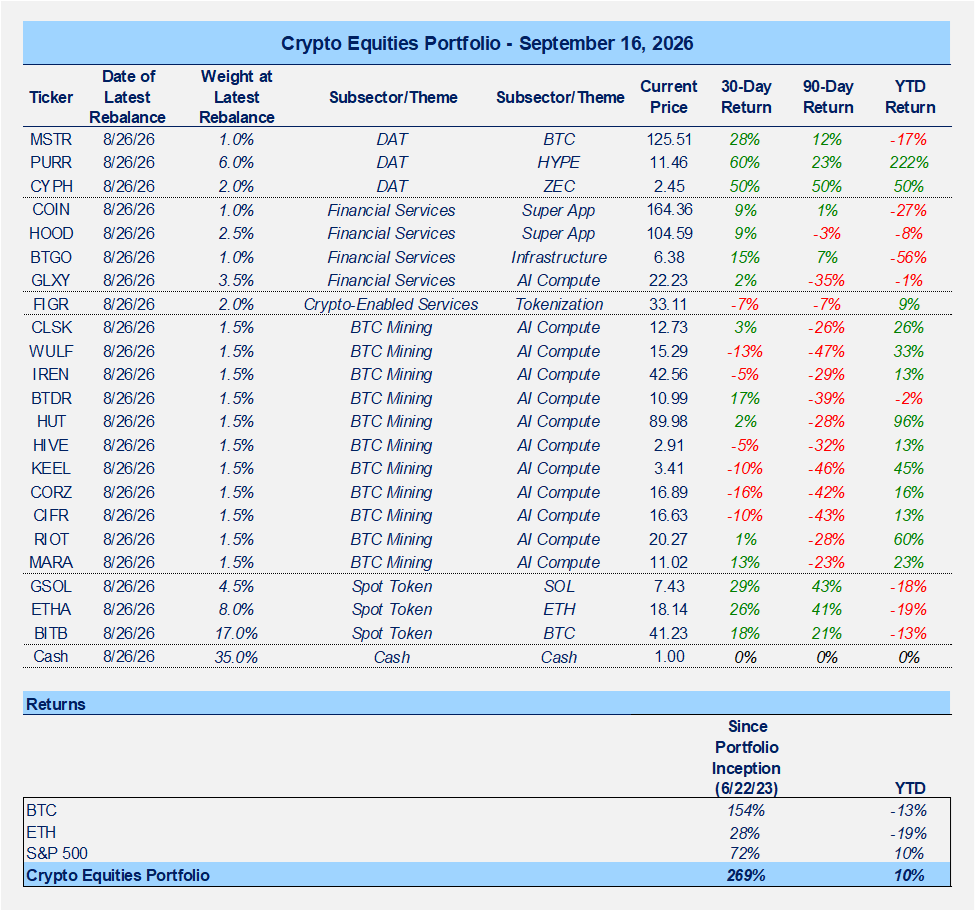
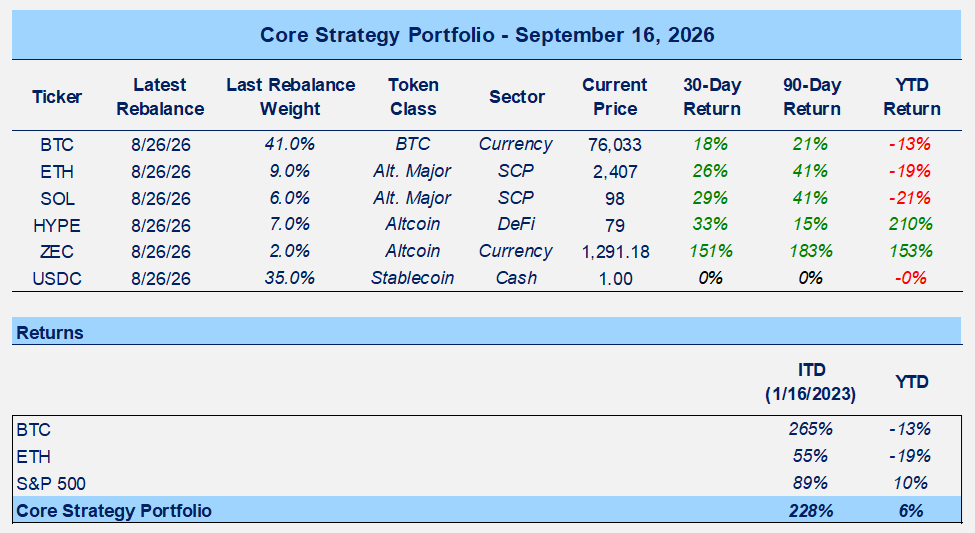
- Bottom line: The Fed delivered a hawkish hike, the dots point toward another increase this year, and there is very little easing embedded in policymakers’ current projections. But the market response was more nuanced. Nominal yields were up across the curve, but the curve did flatten, and crypto held up relatively well. It is worth thinking about how continued Fed tightening (2-3 hikes) into supply-driven inflation would only increase the tension between monetary policy and Treasury’s objective of containing long-term financing costs, potentially raising the probability of further duration-management / YCC-lite intervention down the road. No changes to the model portfolios today.
Portfolios
Tickers in this video: BTC 0.70% ETH 1.30% STRC
______________________________
PS: If you are enjoying our service and its evidence-based approach, please leave us a positive 5-star review on Google reviews —> Click here.