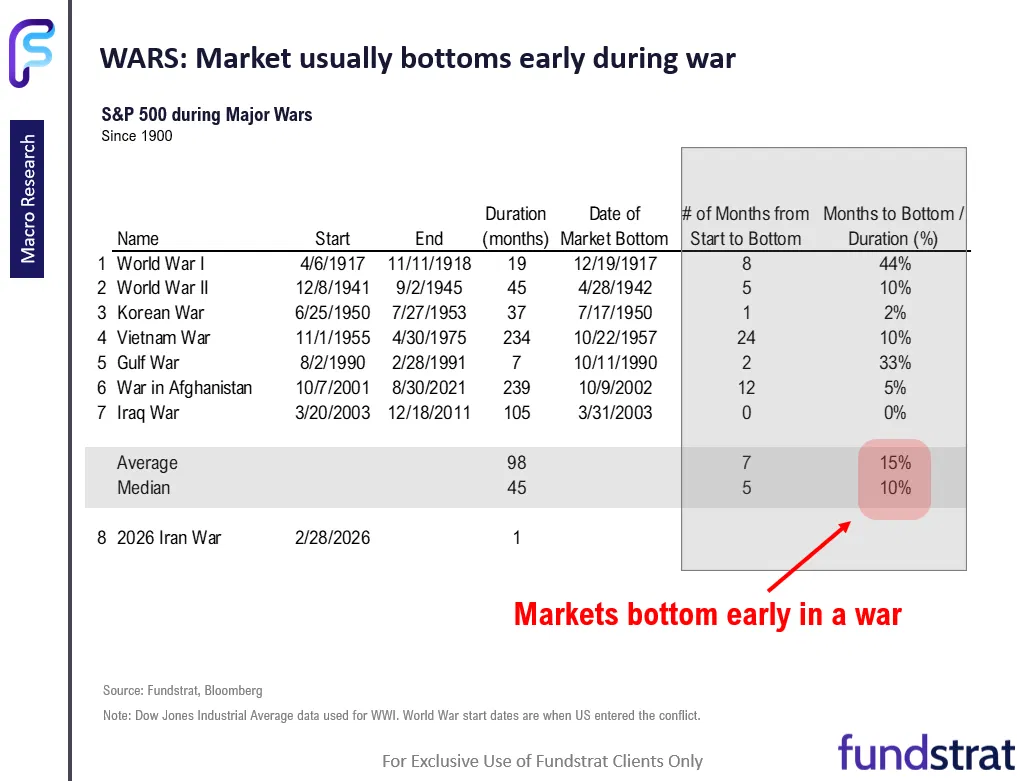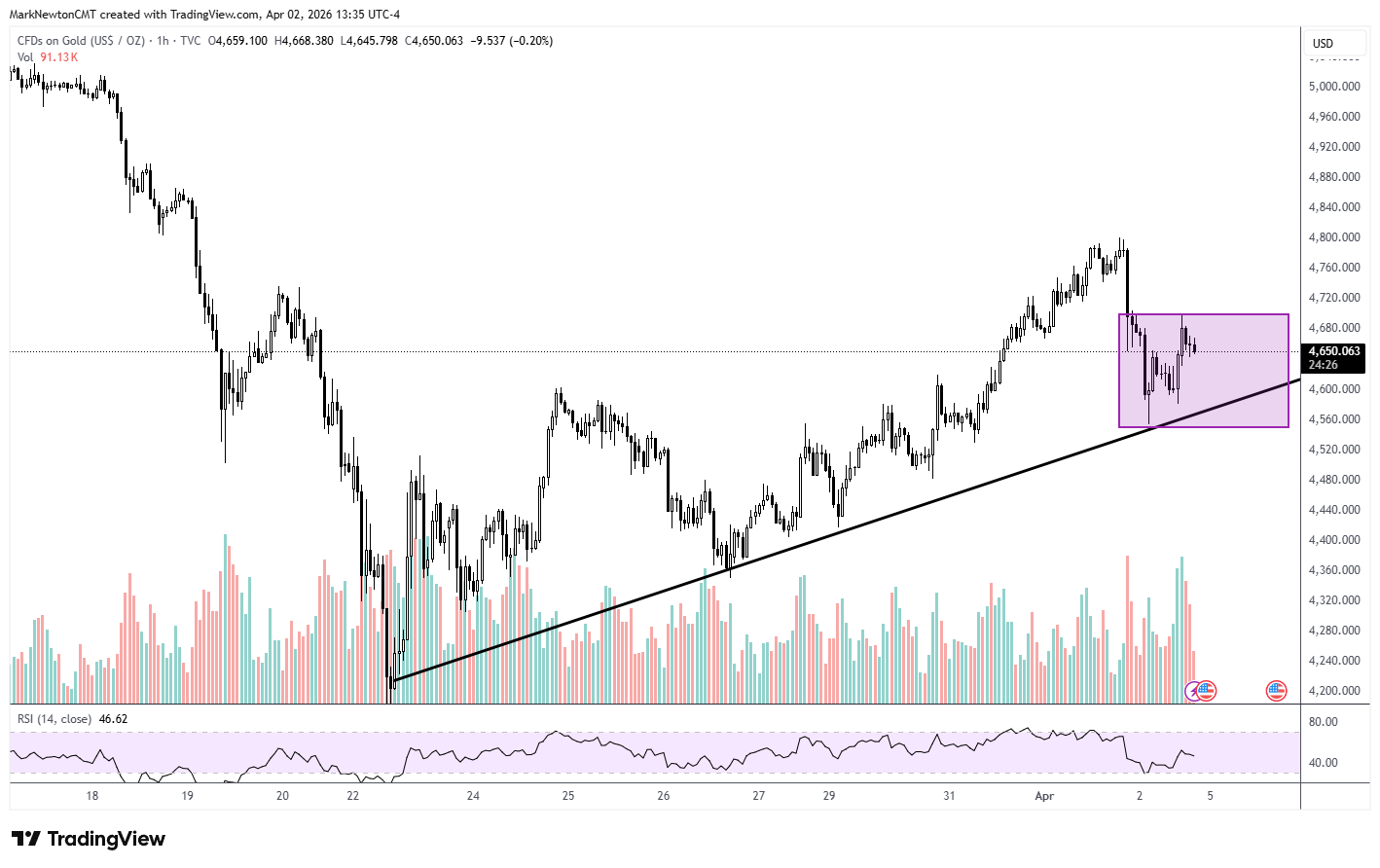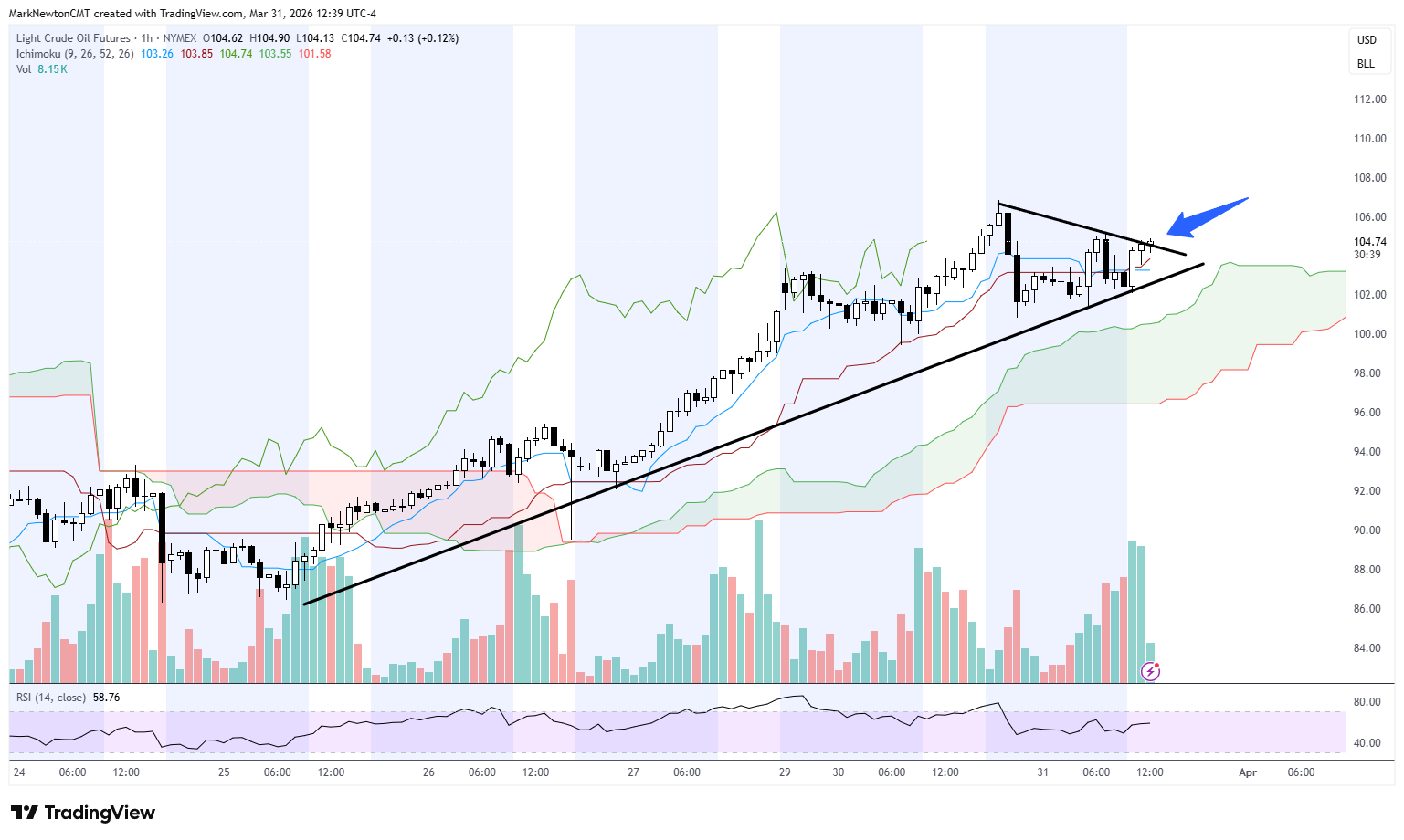






The war in Iran driving up energy prices across the globe arguably remains the primary driver of recent market turmoil. Fundstrat Head of Research Tom Lee acknowledges the risks that high oil prices potentially pose, but last week, he pointed out that on an inflation-adjusted basis, current oil prices remain far lower than the all-time highs of $144 a barrel seen in July 2008. “To match those prices right now in real terms, oil right now would need to be around $220-$240,” he noted. They are currently far from that level.
The effect of current elevation in oil prices could be further dampened by the lower energy intensity of the U.S. economy (as measured by energy used per unit of GDP). Since 1980, this metric has dropped sharply, leading Lee to suggest that “the U.S. economy is a lot more resilient than many people realize.”
Furthermore, with the 10-day moving average of the equity put/call ratio around 0.9, the same average seen during the April 2025 lows. “This gives us a sense that investors have already prepared for the downside,” Lee told us, so “as we look ahead to the month of April, my view is that we are closer to a bottom than those with dire forecasts seem to be anticipating.”
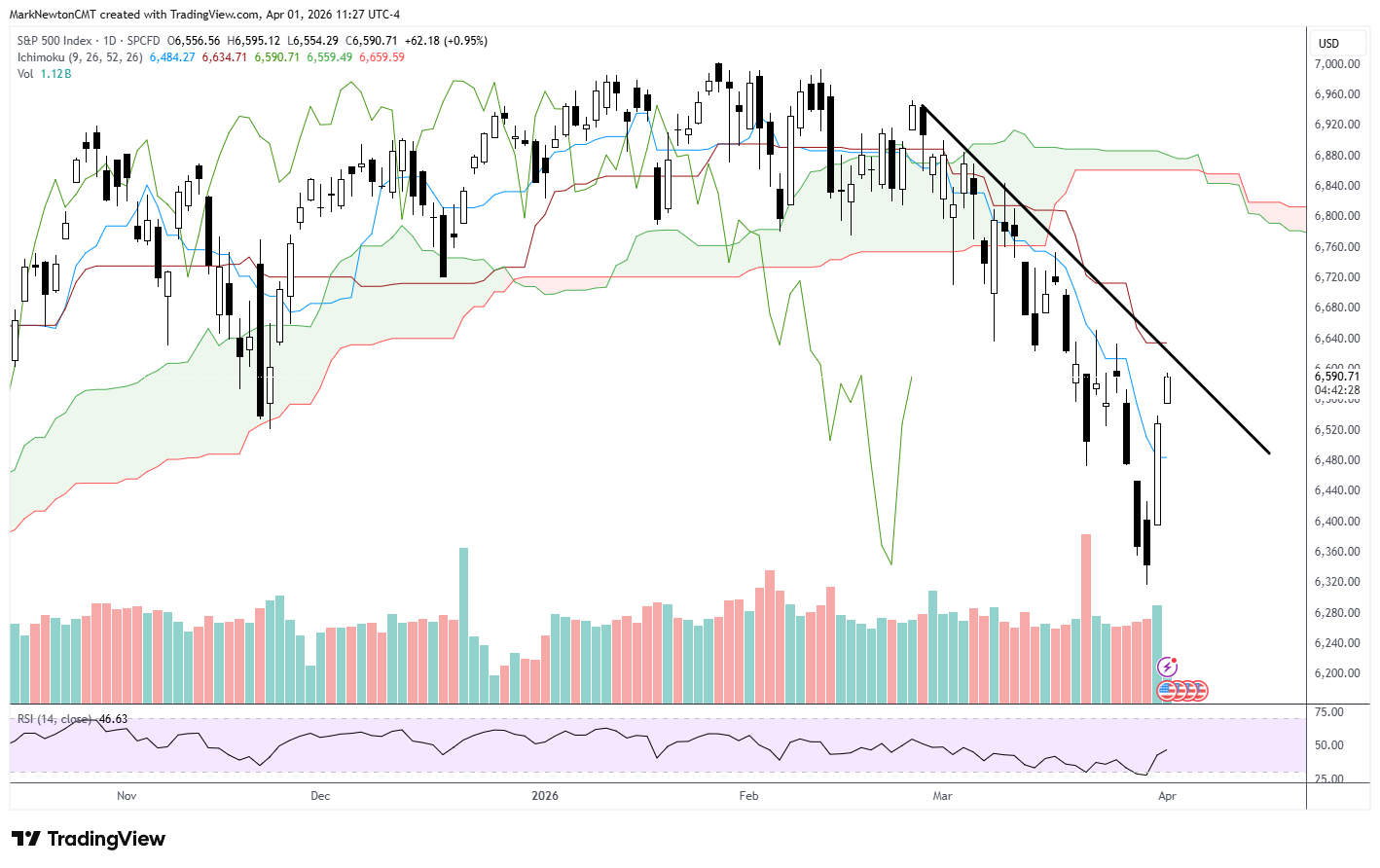
Head of Technical Strategy Mark Newton concurs. “My view is that a bottoming process is starting to get underway,” he told us at our weekly research huddle. “There have been some refreshing developments in the last week with regards to market breadth. The percentage of Russell 3000 stocks above their 20-day moving average has gotten up above the 50% level. So even though some indices make it seem like we’re plummeting, the broader market is arguably stabilizing, and I think that is actually a pretty good sign.”
Furthermore, Newton noted that sectors that had started declining ahead of the broader market are showing signs of life as well. “Both technology and financials have actually held up much better than the rest of the market in the last month. They’ve all been down about 4% but better than the S&P and much better than many other sectors. These both got their head start on the downside, so the fact that they now appear to be stabilizing, I view to be another good sign.”
“I’ve been pretty negative in recent weeks,” he conceded, “but I’m thinking that we’re getting to levels now where it makes a lot of sense to consider, you know, really buying dips and that we’re getting very, very close. I think you still have to be selective, but … yeah, I think we’re going to be OK.”