


After the past few years of AI hype and capital expenditure, investor attention is increasingly on concrete, real-world benefits of this new technology – both in terms of corporate bottom lines and benefits to humanity. When it comes to the latter, the healthcare sector is an obvious focal point. There are many ways to help humanity, but it’s hard to argue that there’s anything more important than healing the sick, finding cures for terrible diseases, and literally saving lives.
In this edition of Signal From Noise, we will look at one of the key areas of health care in which the leading minds are trying to apply AI: pharmaceutical research and development. Today we will focus on the drug discovery aspect of pharmaceutical R&D, with the use of AI in clinical trials to be left to a future installment of Signal From Noise. Later this year, SFN will also cover AI applications in other areas of health care, including clinical practice, healthcare administration, and more.
The search for new medicines
Traditionally, developing new medicines and treatments was a risky, time-consuming process, and sheer luck has arguably played an uncomfortably large role in the discovery of many modern medicines – penicillin and antibiotics being the most famous example. Today, about 90% of drug candidates fail to make it through clinical trials and past the approval stage, and it generally takes 10 years or more to go through the process.
Drug developers have high hopes that AI will change that, and they are exploring several promising avenues in the search for (or creation of) molecules and compounds that can cure illnesses or at least better treat symptoms.
The first involves the analysis of proteins. It can be argued that all, or nearly all, illnesses and diseases, from cancers and autoimmune diseases to neurodegenerative disorders, infectious diseases, and metabolic disorders, are linked to a specific protein. (This is because just about every pathological process in the human body relies on one or more proteins.) Sometimes a pathogen manufactures a protein toxic to the human body, sometimes a patient’s genetic abnormality causes their own body to synthesize a self-detrimental protein, and sometimes a genetic abnormality causes a deleterious reaction to a protein that is harmless to most other people.
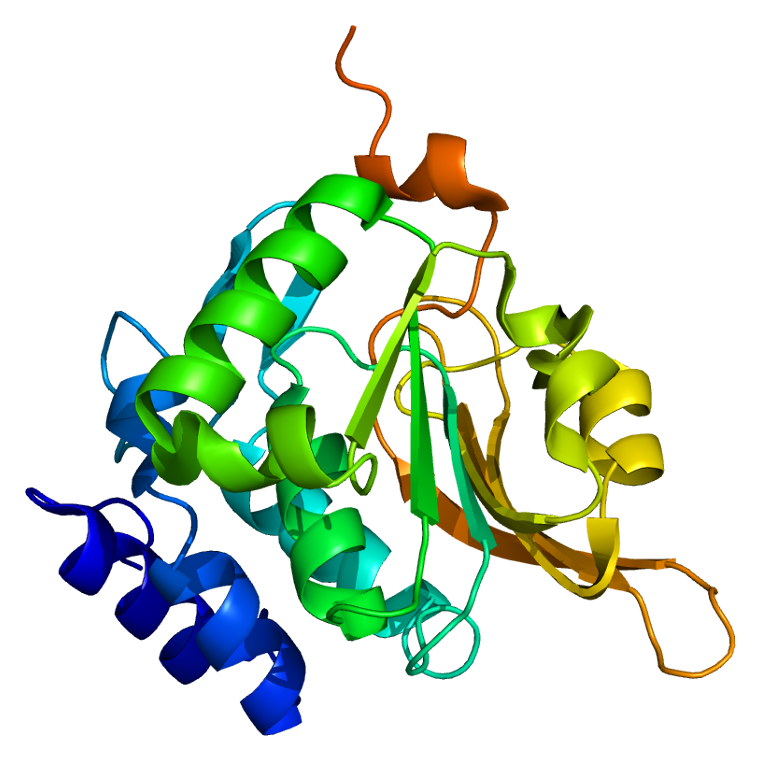
Traditionally, identifying the protein behind any given illness or disorder was a laborious and semi-random process, made even more challenging because a protein is more than just its chemical formula or the amino acids that combine to create it. How a protein behaves in the real world depends on its three-dimensional shape, and until AI (specifically, Google DeepMind’s Nobel Prize-winning AlphaFold platform – more on that later) came along, figuring out the shape of a given protein could take years. The ability to predict the shape of a protein with a high degree of accuracy in just a few hours, as AlphaFold can do, thus greatly speeds up the process of identifying likely causes for a disease, disorder, or condition.
Identifying a problem protein is one thing, identifying a counterpart to somehow neutralize it, for instance by binding to it, is quite another. Developers are seeking to use AI to identify molecules with shapes and chemistries that are likely to be able to do exactly this without disrupting the human body.
There’s an alternative approach that other proponents of AI in drug research are attempting to employ. Rather than trying to identify a cause of an illness and then a cure, the idea is to simply test as many compounds as possible, analyzing their effects in order to identify those compounds that appear to have beneficial effects.
Before the advent of AI and AI-powered computer vision, testing thousands of compounds in such a manner would have been so time-consuming as to be completely impractical. Now, however, researchers can expose diseased cells to tens of thousands of different possible compounds, and AI-assisted computer vision makes it possible to quickly and precisely assess how the cells change in response to each compound.
In other words, researchers are using AI in two key ways: either to intelligently analyze a lock and then figure out how to open it, or as a fast, brute-force tool that tries every possible combination at high speed.
AI is also being used to further winnow drug candidates before testing. AI models trained on data generated by decades of drug tests, experiments, and trials are used to run simulations to identify those least likely to be safe or effective so that costly clinical trials can prioritize higher potential candidates.
AI has successfully assisted in the drug discovery process before. It was instrumental in helping companies like the UK’s BenevolentAI and Eli Lilly LLY -0.88% identify the use of baricitinib (previously approved as a treatment for rheumatoid arthritis and alopecia) for patients hospitalized with COVID-19 during the pandemic, for instance.
However, as of this writing, regulators have yet to approve a medicine or treatment that was primarily developed through the use of AI. Some observers think that’s about to change.
The progress thus far
As of April 2026, 173 drug candidates identified primarily through AI were in clinical trials, with about 15 to 20 entering key Phase III trials. For reference:
- Phase I trials test a potential drug’s safety
- Phase II trials begin testing for efficacy, optimal dosing protocols, and side effects
- Phase III involves longer-term, larger-scale human trials that confirm efficacy while determining whether the drug candidate is more effective than existing alternatives and also seeking to identify potential adverse reactions
Thus far, AI has fulfilled its promise in helping to identify promising candidates for testing. In Phase I trials, AI-developed drugs have notched success rates of 80-90%, significantly higher than the 52% success rate with traditional non-AI methods. The story is less sanguine for Phase II: AI-developed candidates have passed with success rates of 40%, roughly the same as with candidates developed traditionally.
But as the saying goes, getting close only counts in horseshoes and hand grenades. Veteran pharmaceutical researchers consider Phase III as the most challenging stage of clinical trials. Traditionally, 50% of drug candidates fail to make it through. The hope is that AI-developed drugs will have a far lower fail rate.
Because this is the first time that AI-developed drugs are in this challenging stage, the next 12 to 18 months will thus be closely scrutinized as AI-developed drug candidates go through Phase III trials and then, hopefully, begin the regulatory approval process.
Three key players – and a bonus one worth watching
Although the major Big Pharma names are looking into integrating AI into their drug development efforts, there are several smaller companies that are making AI-powered drug discovery the core of their business models and strategies. A look into their operations is useful not just as a way to assess their potential as investments, but also to identify the possible routes to a healthier society.
Recursion RXRX 5.23%
Recursion’s ultimate ambition is to revamp the entire drug discovery process, replacing much of the usual guesswork and luck with a standardized, uniform, repeatable process based on what it calls a “highly programmable, data-driven, and scalable computational discovery engine.” As part of this effort, Nvidia in 2023 made a $50 million investment in Recursion to help it improve its computational chemistry (the use of computer simulations and mathematical algorithms to solve chemistry problems), which ultimately have been built into Recursion’s BioHive-2 supercomputer.
While Recursion is exploring multiple avenues of drug discovery, it is arguably most notable for a methodology that can be traced to the company’s roots as a company specializing in using computer vision for research. This, combined with extensive robotic capabilities, has resulted in a highly automated lab that can analyze 2.2 million samples per week and grow 100 billion cells per year (across 50 cell types) for tests and further experiments.
With this, Recursion has built a proprietary 50 petabyte (and growing) database that incorporates billions of cellular images captured during numerous CRISPR-assisted experiments, along with biological and chemical data spanning the specialties of phenomics, transcriptomics, proteomics, and ADME (absorption, distribution, metabolism, excretion.) The company has thus been able to sidestep the messy problems of auditing external data sets for quality/reliability and standardizing data formats. (For reference: one petabyte = 1,000 terabytes, and 50 petabytes would be enough to store 10 million feature-length movies in HD format.)
This database, the AI models trained on the database, and Recursion’s wet-lab capabilities (a wet lab is what most laypersons imagine a lab is, while a dry lab is one that only runs computer modeling and simulations) enable the brute-force method of AI-powered drug discovery discussed above. This capability was significantly enhanced by Recursion’s 2024 acquisition of Britain’s Exscientia, which added AI-generated chemistry expertise to the former’s biology-based focus.
Importantly, every single lab test improves the model.
Among the company’s most promising candidates right now is REC-4881, a drug candidate that will hopefully treat Familial Adenomatous Polyposis (FAP), a genetic disorder that causes serious colon and rectal disorders and, ultimately, colon cancer by age 40. REC-4881 is in Phase II testing.
As with its competitors (see below), Recursion’s business model is a hybrid one. The company has a pipeline of in-house drug candidates focusing on rare diseases and various cancers (FAP falls under both categories), but it also licenses its platform for use by traditional Big Pharma companies like Bayer BAYRY and Roche/Genentech RHHBY – as well as partners gained through its Exscientia acquisition such as Germany’s Merck MKKGY [note that this company is completely independent from the U.S.-based Merck & Co. MRK -1.32% ], Sanofi SNY -0.20% , and Bristol Myers Squibb BMY -1.89% . This aspect of its business generates the bulk of the company’s revenues even as it engages in its own drug discovery efforts. The latter remains risky even with the help of AI. Former Chief Executive Chris Gibson had promised in 2014 that Recursion could develop 100 drugs in 10 years, and his departure from his post at the beginning of 2026 (as well as his subsequent departure from its board) is widely seen as having been driven by the company’s failure to bring a single drug of its own to market during his tenure – even though the expansion in the company’s research capabilities he spearheaded is impressive.
Recursion shares are down 13.0% this year, against the healthcare sector’s (XLV -0.91% ) 3.7% gain.
Schrodinger Inc. SDGR -2.99%
Schrodinger is no upstart startup. To use pop-culture parlance, it is one of the OGs of applied machine learning. It was founded as a computational chemistry company in 1990 and since 2018, it has been involved in AI-powered drug discovery. (Computational chemistry refers to pure and applied chemical research that relies primarily on computer simulations rather than wet-lab experimentation. Schrodinger is thus not just involved in drug discovery, but also advanced materials science.)
Unlike Recursion, Schrodinger’s methodology is grounded in physics-based simulations on a molecular level, rather than relying on pattern recognition from datasets documenting past biological reactions. The company believes that this approach is particularly useful in weeding out potential drug candidates that have a high likelihood of having toxic side effects.
While Schrodinger has long integrated AI into its simulations, the company is leaning further into AI this year, with plans to introduce Bunsen, described as an AI agentic co-scientist that can autonomously execute molecular discovery workflows, to customers. Schrodinger said that Bunsen has been in use internally, both for materials science research and drug discovery.
Schrodinger also has a hybrid business model, albeit one that is arguably more complex than Recursion’s. Schrodinger sells a software platform that enables clients (both pharma/biotech and from other sectors) to predict molecular properties and simulate atomic interactions with high accuracy, and as with Recursion, the revenues from those operations help fund its own drug discovery division. Novartis is a key partner and licensee of Schrodinger in this sense. Others include Bristol Myers Squibb, Sanofi, and Takeda TAK -1.39% .
However, Schrodinger’s collaborative licensing agreements have also frequently taken the form of “co-founder” equity stakes in startups that paid off in subsequent sales by those startups. For example, the company’s stake in Nimbus Therapeutics led to $147.3 million in payoffs after Nimbus sold its TAK-279 psoriasis-treatment candidate (now known as zasocitinib and currently slated to be submitted for regulatory approval, having recently passed Phase III trials) to Takeda, for example. In 2024, Schrodinger collected $47.6 million for its stake in Morphic when Eli Lilly acquired the startup for its candidate for inflammatory bowel disease. Similarly in April, Ajax Therapeutics, in which Schrodinger owns 5.8%, was acquired by Eli Lilly for Ajax’s potential treatment for myelofibrosis in a deal that could be worth up to $133 million for Schrodinger if certain milestones are achieved.
Within its own pipeline, Schrodinger has several promising candidates in Phase I trials. They include SGR-1505, a potential B-cell lymphoma treatment that recently received FDA Fast Track Designation, as well as SGR-3515, a possible treatment for advanced solid tumors such as those seen in ovarian and uterine cancers. The company reported promising results for the latter at an industry conference in April.
Schrodinger shares are down 8.6% in 2026, YTD.
Insilico Medicine
Insilico, the third company in our discussion, is admittedly a challenge for U.S. equity investors seeking to acquire direct exposure, as its shares trade only on the Hong Kong Stock Exchange. The company has dual headquarters in New York and Hong Kong, along with lab operations in Suzhou, China.
For those interested in the nascent field of AI-driven drug discovery, it is nevertheless an important company to watch, with pharma giant Sanofi having signed a deal of up to $1.2 billion to collaborate with the company. A similar partnership agreement reached with Eli Lilly could – if all development, regulatory, and commercial milestones are achieved – result in $2.75 billion in revenues for Insilico. Although such agreements are backweighted – the full payout will come only if optimal levels of success are achieved – Insilico notably boasts that of the top 20 multinational pharmaceutical companies (as measured by annual revenue), 13 have signed such SaaS-style licensing agreements.
The company’s platform integrates AI into every stage of the drug development process, covering biology- and chemistry-based drug discovery and trial-outcome prediction. Each of these is covered by a separate pillar: PandaOmics, a generative AI for target discovery trained on biomedical research texts and literature (grant and patent applications, for instance) across various “omics” (e.g., genomics, epigenomics, metabolomics, and other fields studying functionally categorized sets of molecules within organisms); Chemistry42, a small-molecule design AI that makes use of computational medicinal chemistry, and inClinico, which seeks to use AI to predict a candidate’s likelihood passing Phase II trials and into Phase III.
The strongest supportive evidence for the validity of Insilico’s approach is rentosertib, a wholly AI-discovered and AI-designed drug candidate for the treatment of idiopathic pulmonary fibrosis (IPF). Rentosertib published positive Phase II safety and efficacy results in Nature Medicine in 2025 and Phase III testing began this month. Insilico is understandably proud that it took just 18 months and $2.6 million to identify the IPF target, design a matching molecule to inhibit it, and complete the preclinical work needed to prepare for human trials. This sort of progress typically takes three to six years – and tens of millions of dollars.
Rentosertib is not the only candidate in Insilico’s pipeline. The company has another 30 candidates at various stages of development, eight of which are in Phase I trials. Five others have received regulatory approval to begin clinical trials.
In Hong Kong, Insilico shares are up 15.1% year-to-date.
Isomorphic Labs
Isomorphic Labs also deserves a mention. The company is an Alphabet/Google GOOGL -1.17% spinoff, led by Nobel Laureate Demis Hassabis. Hassabis was working for Google DeepMind when he developed the AI-based AlphaFold 2 3D protein structure predictive modelling technology for which he and John Jumper co-won the 2024 Nobel Prize in Chemistry (along with David Baker for separate but related breakthroughs). Alphabet continues to maintain a majority stake in Isomorphic Labs.
Now run independently from DeepMind out of offices in London, Lausanne, and Cambridge, Mass., Isomorphic has expanded its original AlphaFold technology to AlphaFold 3, which can predict not just the likely shape of a protein, but how it might bind with DNA, RNA, or other molecules. Isomorphic has also branched out from this platform: in February, it introduced its Drug Design Engine (DDE), which extends the process into the design of high-potential drug candidates that are likely to be both effective and safe.
Isomorphic Labs has signed partnership deals with major pharmaceutical companies including Eli Lilly, Novartis, and Johnson & Johnson. As with the other companies discussed above, these partnerships have been heavily backloaded and contingent on successful milestones being achieved. Similarly, Isomorphic is working on its own pipeline of drug candidates, with the intention of selling rights in the event of successful early-stage clinical trials (rather than pursuing the trial process to its conclusion). The nature of this pipeline, including details about any promising candidates, have not been disclosed, but Hassabis has suggested that the current schedule is to begin clinical tests on one or more candidates before the end of the year.
Isomorphic Labs is privately held, as of this writing.
Defining success
We have discussed the main strategies being used to apply AI to drug discovery, and in our view, they all seem like sound, logical methodologies. This is a view that appears to be shared by many pharmaceutical-industry insiders, as evidenced by how many industry mainstays are exploring all of them simultaneously.
The application of AI in discovering new treatments and medications precedes the current craze for AI that arguably began in 2022, when OpenAI’s ChatGPT captured public imagination. Investors are increasingly expressing a desire to see tangible results in the form of novel treatments being approved by regulators and brought to market. Skeptics have suggested that this is all hype: that AI might not deliver superior results – merely faster failures. The next 12 to 18 months will be important to watch, as a growing number of AI-developed drug candidates advance into late-stage clinical trials and possibly begin seeking regulatory approval. The rate of progress will arguably be viewed as an assessment of whether the AI ROI for drug development is paying off. The first approval could generate some short-term tailwinds for the stocks of the companies involved.
Yet although success rates are important, it’s important to recognize that they aren’t the only measure of AI’s ROI. Time, after all, is money. Even if the drug candidates AI generates ultimately succeed (or fail) at the same percentages as traditionally derived candidates, even “faster failures” should be seen as a significant win. If a drug candidate can be eliminated from consideration after a couple years of research and a few million dollars, that’s significantly better than the 10-15 years and billions of dollars it has frequently taken using the old ways. The tremendous time and cost savings means drug companies can afford to make a greater number of attempts, so the aggregate odds of achieving success still improve. That would arguably still be a win for both patients and investors.
While we have discussed how AI is being used to better and more quickly find the most promising candidates for treating diseases, illnesses, and chronic conditions, get a new drug improved involves more than just finding great candidates. The complex clinical trials process is just as important, complicated, and time consuming. A myriad of difficult decisions must be made correctly to achieve success. We will discuss how AI is being used in this phase of drug development this next month.
That said, as always, Signal From Noise should not be used as a source of investment recommendations but rather ideas for further investigation. We encourage you to explore our full Signal From Noise library, which includes a fresh look at the Magnificent Seven, deep dives on why investors should care about Gen Xers, the recent memory chip gold rush, the future of malls, and drone warfare. You can also find our take on space-exploration investments, defense stocks, and the business of farming.